Scaling a business is rarely a predictable, linear path. For local and regional companies, the leap from a steady, profitable operation to a rapidly expanding enterprise is often fraught with hidden operational bottlenecks. The strategies that keep a small team busy and efficient simply do not hold up when you attempt to double your client base, expand your geographic footprint, or multiply your fleet. True growth requires a deliberate shift away from the owner-operator model toward scalable systems, optimized asset management, and robust risk mitigation frameworks.
1. Optimizing Fleet Logistics and Route Efficiency
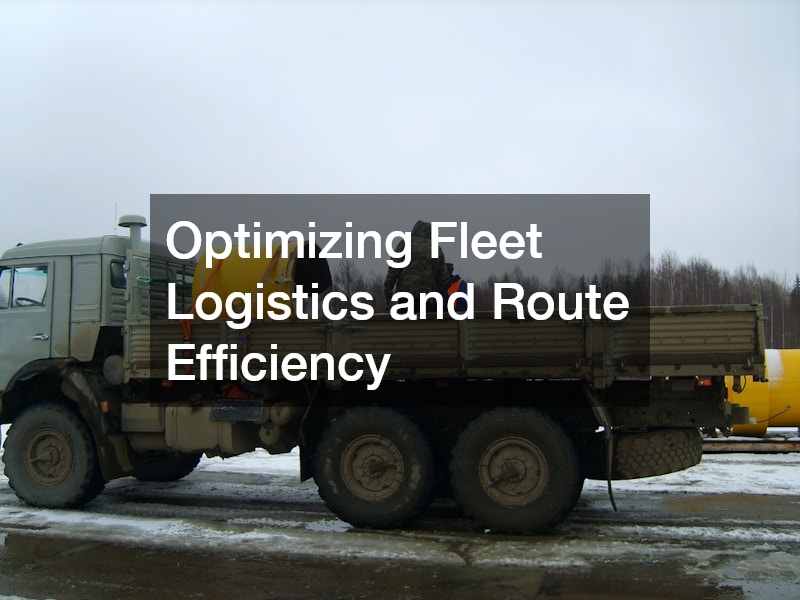
For any business that relies on a fleet of vehicles to deliver services, transportation is often the single largest variable expense. Scaling operations means your vehicles are spending more time on the road, which can lead to skyrocketing fuel costs, vehicle wear and tear, and driver fatigue if not managed aggressively. Achieving regional density—where your jobs are clustered tightly together—is the key to protecting your profit margins as you grow.
Implementing intelligent fleet management software is no longer optional for expanding businesses. Real-time GPS tracking, automated dispatching, and dynamic route optimization allow companies to respond to customer demands faster while minimizing empty miles. When mapping out an expansion strategy, successful moving businesses must prioritize route density over sheer geographic reach. Spreading a team too thin across multiple counties increases transit times and lowers the number of billable hours per day.
Similarly, managing asset turnaround times is critical for logistics-heavy setups. In a high-volume dumpster rental business, profitability hinges on how quickly containers can be dropped off, picked up, and emptied. If a truck sits idle in traffic or a container remains unutilized on a job site for too long, capital is effectively tied up. By utilizing data analytics to track container turn times and optimizing driver schedules, asset-intensive operations can scale their daily capacity without immediately needing to purchase expensive new vehicles.
2. Streamlining High-Volume Material Management
As an industrial or trade business expands, the sheer volume of materials flowing through the operation can quickly overwhelm standard yard or warehouse spaces. Scalability requires strict inventory controls, efficient sorting mechanisms, and a layout designed for maximum throughput. When material handling becomes a bottleneck, it slows down field technicians, delays project completions, and eats into cash flow.
Effective space utilization and automated inventory tracking are essential for handling larger volumes of physical goods. Companies must design their processing hubs to minimize double-handling—the inefficient practice of moving a single item multiple times before it reaches its final destination. In the recycling and salvage sectors, this layout efficiency is a major differentiator. High-performing scrap recycling businesses rely on highly structured material flows and advanced sorting machinery to process tons of metal and electronics quickly, transforming raw intake into sellable commodities with minimal manual labor.
Furthermore, expanding businesses must balance material processing with strict regulatory and safety standards. For instance, growing propane businesses face unique compliance hurdles regarding bulk storage, transport safety, and hazardous material regulations. To scale faster, these companies must invest in automated tank monitoring systems and digital compliance tracking. This ensures that as distribution volumes increase, safety protocols are executed flawlessly without requiring constant manual oversight from the leadership team.
3. Overcoming the Skilled Labor Shortage Through Standardization
One of the most significant barriers to rapid business expansion is the ongoing shortage of qualified, skilled labor. When growth depends entirely on finding “unicorn” employees who already possess decades of niche experience, expansion stalls. To break through this ceiling, companies must pivot toward building internal training academies and documenting every core process into standard operating procedures.
When a business standardizes its technical processes, it lowers the barrier to entry for new hires, allowing apprentices to become profitable field technicians much faster. This systemic approach to labor is vital for technical trades where precision and safety are paramount. Expanding welding businesses can accelerate their growth by establishing clear, internal certification tiers and using standardized weld procedures. This ensures that every technician, regardless of their tenure, produces the exact same structural quality, protecting the brand’s reputation during a hiring surge.
Transitioning to mobile field service management platforms also helps bridge the skill gap by giving technicians instant access to job histories, digital checklists, and remote support from senior engineers. For a rapidly growing well drilling business, having a centralized digital repository of geological data, equipment specs, and safety protocols allows field crews to troubleshoot complex on-site issues independently. This reduces the operational dependency on a single business owner or senior manager, freeing up leadership to focus entirely on high-level market expansion.
4. Maximizing Fleet Capacity and Environmental Compliance
Expanding a field-based service business often means dealing with increasingly complex municipal regulations, disposal fees, and environmental compliance standards. Failing to plan for these regulatory hurdles can result in costly fines or sudden operational shutdowns that completely derail an expansion strategy. Businesses must proactively build relationships with local regulatory bodies and optimize their disposal logistics to stay ahead of the curve.
Route optimization and capacity management are particularly crucial for service providers handling liquid waste or hazardous materials. A growing cesspool pumping business must carefully calculate travel distances between residential service calls and authorized waste disposal facilities. If trucks are driving long distances with half-empty tanks, the business is losing money on every mile. By grouping service calls geographically and scheduling disposal runs during off-peak traffic hours, operators can maximize the revenue generated per truck-load.
At the same time, maintaining a highly visible, well-maintained fleet serves as a powerful marketing tool during a regional rollout. For companies operating a secondary branch or an additional fleet within a dumpster rental business, clean equipment and professional, uniform-clad drivers build immediate trust in a new market. Blending regulatory compliance with optimized route planning ensures that your physical expansion is both legally compliant and highly profitable from day one.
5. Strengthening Legal Infrastructure and Contract Management
As business revenue and employee headcounts grow, so does the company’s exposure to legal liability. Operating on handshake agreements or outdated, boilerplate contracts is a recipe for disaster during an expansion phase. A single major contract dispute, wage-and-hour lawsuit, or regulatory fine can erase years of hard-earned growth.
Securing a long-term partnership with a dedicated business law firm is an essential step for any company transitioning from a small local shop to a regional enterprise. Corporate attorneys help structure the business for growth, whether that involves transitioning from a basic LLC to an S-Corporation, setting up subsidiary entities to isolate liability, or reviewing commercial real estate leases for new corporate offices. Furthermore, having a legal expert draft ironclad master service agreements protects cash flow by establishing clear payment terms, project scopes, and dispute resolution mechanisms.
Proactive legal risk management extends beyond basic corporate structure into specialized operational compliance. While industrial and service sectors focus on contracts and labor laws, high-value retail and distribution niches face unique asset protection challenges. For example, establishing robust inventory tracking and secure supply chain protocols is a fundamental requirement when managing insurance for jewelry business entities or high-ticket luxury goods. Securing specialized coverage and maintaining strict legal compliance ensures that an unexpected loss or theft does not compromise the financial health of the wider enterprise.
6. Modernizing the Back Office Through Automation
A common pitfall of rapid expansion is the “back-office bottleneck.” A company might successfully double its sales volume, only to find its administrative staff completely overwhelmed by invoicing, payroll, scheduling, and customer service inquiries. When administrative systems break down, billing cycles lag, cash flow tightens, and customer satisfaction plummets.
To scale faster without exponentially increasing administrative overhead, businesses must embrace digital automation. Implementing an enterprise resource planning system or integrating your customer relationship management software with your accounting platform allows data to flow seamlessly between departments. Automated invoicing systems can send bills the moment a field technician marks a job as complete, dramatically reducing days’ sales outstanding and keeping cash reserves healthy.
Furthermore, automating customer communication through automated text reminders, online booking portals, and AI-driven FAQ bots improves the customer experience while freeing up office staff to handle complex operational challenges. When administrative workflows are digitized and automated, a lean back-office team can easily support a field operation that has doubled or tripled in size.
7. Capital Allocation and Cash Flow Management
Growth consumes cash. Expanding into new territories, hiring staff ahead of demand, and purchasing inventory or machinery requires significant upfront capital. Many promising companies go bankrupt not because they lack demand, but because they run out of cash while trying to fulfill that demand. Managing the timing of cash inflows and outflows is the ultimate test of a scaling business.
To maintain a healthy cash runway, business owners must develop sophisticated cash flow forecasting models that project income and expenses at least six months into the future. It is critical to establish strong banking relationships before you desperately need capital. Securing a revolving business line of credit during prosperous times gives you the financial flexibility to seize sudden market opportunities or bridge temporary gaps in cash flow.
Additionally, smart capital allocation means carefully weighing the pros and cons of buying versus leasing equipment. While buying machinery outright builds equity, leasing preserves cash and often includes maintenance agreements that reduce operational risk. By keeping overhead flexible and maintaining strict control over receivables, a business can fund its expansion sustainably without taking on toxic levels of debt.
8. Designing a Scalable Sales and Marketing Engine
Relying purely on organic word-of-mouth recommendations is rarely enough to sustain a rapid corporate expansion. To feed a larger operational machine, you need a predictable, repeatable system for generating high-quality leads. This requires transitioning from passive, reactive marketing to an active, data-driven customer acquisition strategy.
Building a scalable marketing engine starts with a strong digital presence, including a search-engine-optimized website, localized advertising campaigns, and an active review generation strategy. Diversifying your lead sources across digital ads, content marketing, and strategic B2B partnerships ensures that your pipeline remains full even if one channel underperforms.
For service-based businesses, establishing a dedicated sales team separate from the operational execution team is a game-changer. When field technicians are also responsible for selling, both production and sales suffer. By hiring dedicated account executives or estimators, you can ensure that prospective clients receive rapid quotes and professional follow-ups, driving up your closing ratios and fueling top-line revenue growth.
9. Cultivating Leadership and Mid-Level Management
A business owner cannot be everywhere at once. As a company scales, the founder must transition from a micromanager who oversees every single decision to a strategic leader who empowers a trusted management team. Without capable mid-level managers to oversee daily operations, the owner becomes the ultimate bottleneck, stalling further growth.
Developing an internal leadership pipeline requires a deliberate investment in management training and mentorship. Promising field technicians or administrative staff should be taught how to manage people, analyze operational data, and handle customer escalations. Clear key performance indicators must be established for each department so that managers know exactly what success looks like and can be held accountable for their team’s output.
Delegating authority also requires learning to trust the systems you have built. When a business owner steps back from daily fire-fighting, they gain the mental clarity needed to focus on long-term vision, strategic partnerships, and macro-level financial health. A business is truly scalable only when it can run smoothly for weeks at a time without the owner’s direct intervention.
10. Leveraging Data and Analytics for Continuous Improvement
The final pillar of rapid business expansion is data-driven decision-making. Operating on gut feeling might work when you have five employees, but it becomes incredibly risky when you have fifty. To navigate a successful expansion, leaders must have real-time visibility into the metrics that drive profitability and operational efficiency.
Modern business tools generate a wealth of data that can be used to optimize every corner of an enterprise. By identifying and tracking a few critical key performance indicators—such as customer acquisition cost, customer lifetime value, labor efficiency ratios, and gross profit margins per service line—management can spot trends and address inefficiencies before they hurt the bottom line.
Ultimately, successful expansion is about building an organization that is bigger and more resilient than any single individual or department. When your legal frameworks are sound, your capital allocation is disciplined, and your management team is fully empowered, your business can scale rapidly without sacrificing quality or profitability. Take a step back from the daily grind, audit your current operational bottlenecks, and begin implementing the scalable infrastructure your business needs to achieve its true growth potential.